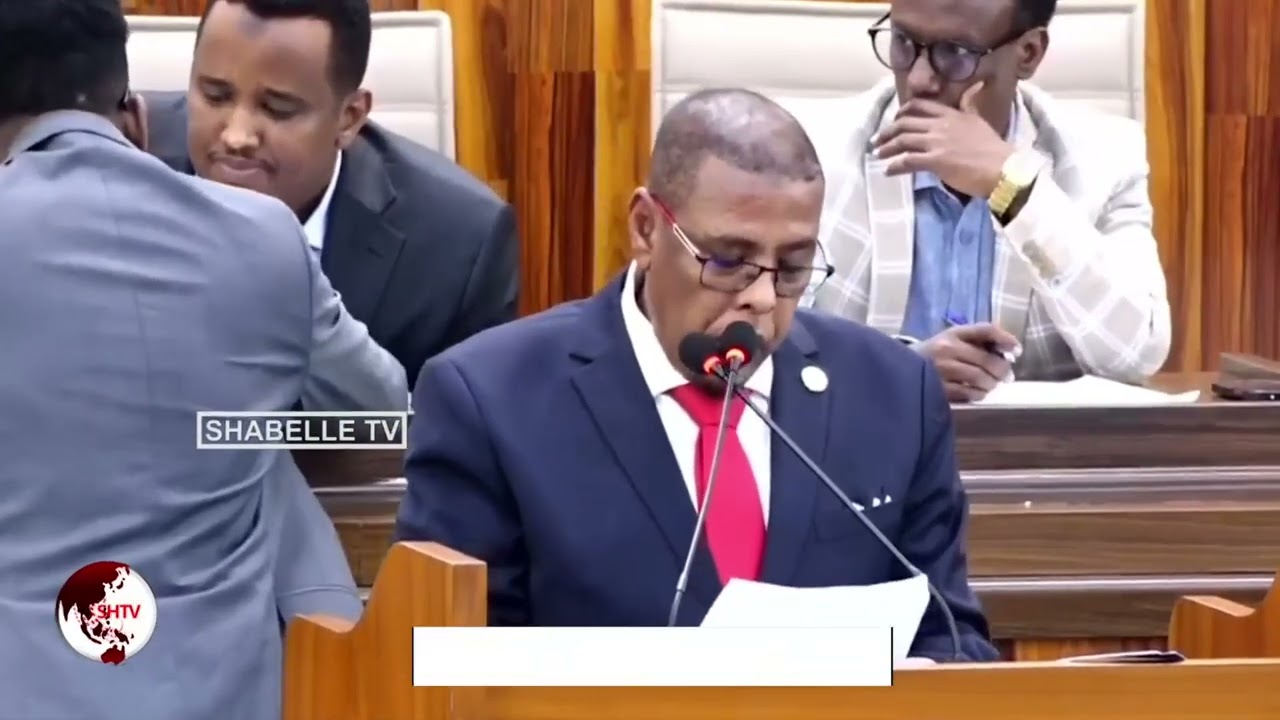
Mogadishu — Member of Parliament Barako has raised significant concerns regarding constitutional provisions that grant the Somali president the power to dissolve parliament, describing such authority as a "new conflict" that undermines the legislative branch's independence.
Speaking to Shabelle TV, the parliamentarian argued that it is constitutionally problematic for a president elected by parliament to subsequently possess the authority to dissolve that same institution. "How can it be acceptable that the president elected by parliament can dissolve the parliament that elected him?" Barako questioned, referring to provisions in Article 87.

The lawmaker specifically targeted Article 87, paragraphs two and three, which address presidential terms and dissolution powers. He noted that while he understands provisions regarding elections postponed from their original dates and the final three years of a term, the dissolution power creates an unacceptable dynamic where the president could side with one chamber against the other.
Barako proposed adding the Speakers of both houses—the House of the People and the Upper House—to the constitutional line of succession when the president is temporarily unable to serve. Currently, he argued, the system disproportionately favors the Upper House, potentially creating partisan alignment. "It would be better to include both speakers when they complete their terms constitutionally, and for them to become honorary members of the Upper House," he suggested.
Source: Original video
The parliamentarian also addressed Articles 90 and 97, focusing on the chain of command when the president is absent. He proposed that the Secretary of the House of the People should serve as acting head rather than the Secretary of the Upper House, arguing this better reflects the representative nature of the lower house.
Barako further criticized provisions requiring the president to consult with political parties, noting that Somalia's political landscape currently lacks genuine national parties. "How can this work when the parties the president consults are not truly national?" he asked, referencing the predominance of clan-based and regional entities.

The lawmaker referenced Minnesota's impeachment procedures as a model for limiting executive power, suggesting Somalia adopt similar checks and balances. He emphasized that parliament's authority should not be undermined by the presidency, particularly regarding electoral matters.
"The term cannot be longer than the builder," Barako stated, using a Somali proverb to illustrate his point that presidential authority should not exceed the mandate of the institution that created it. He expressed hope that these constitutional provisions would be removed to prevent the president from dissolving the parliament that elected him.
His proposals come amid ongoing debates about constitutional reform in Somalia, with lawmakers increasingly scrutinizing the balance of power between the executive and legislative branches.
