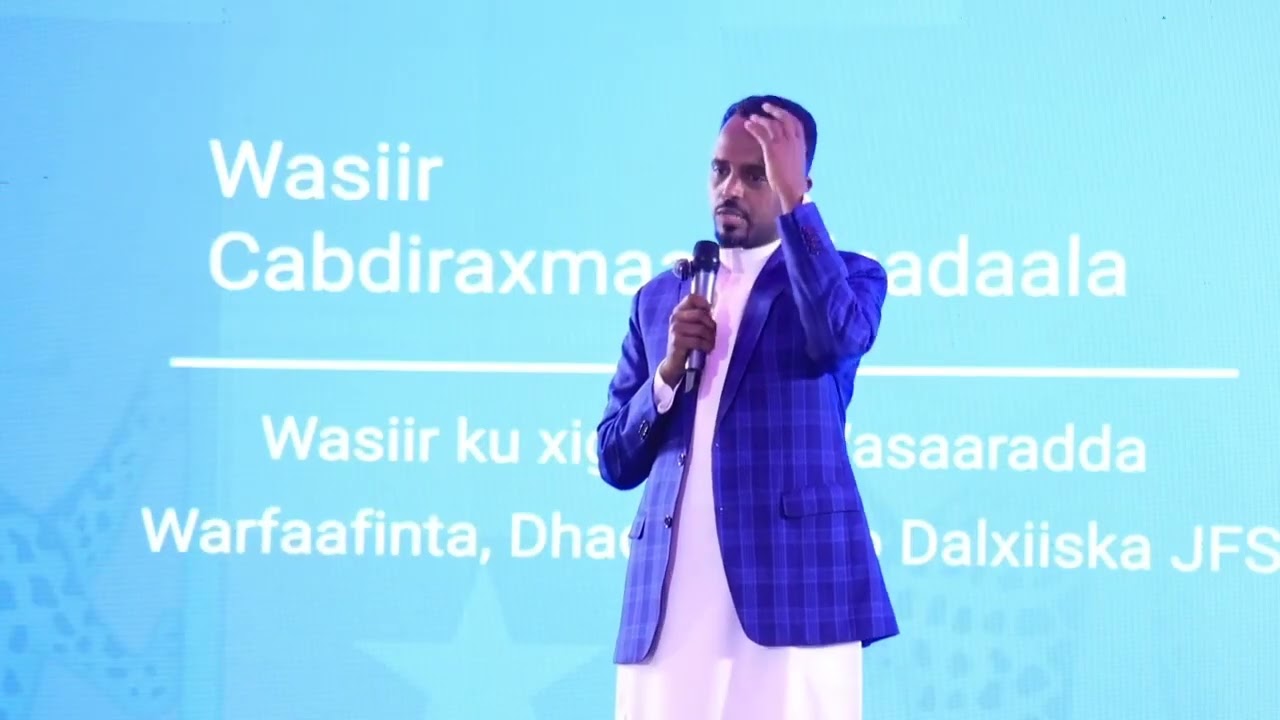
Speaking on Somali National Television, Justice Minister Al-Cadaala described a recent deadly incident in a rural village in Lower Shabelle's Walaweyn district, where tribal clashes resulted in one of the most violent episodes in recent months. According to the minister, a young pastoralist armed with a smartphone livestreamed the burning of a rival village, having received substantial financial support from abroad.
"The young man broadcast live while the village was being burned, and his people called for support," Al-Cadaala stated. "What is astonishing is that before the attack even occurred, he received up to $80,000 sent by many people abroad who were happy about what he was broadcasting and the village being burned."

The following day, retaliatory attacks targeted the livestreamer's own village, resulting in the deaths of between 120 and 140 Somali civilians. The minister noted that the violence was exacerbated by graphic footage shared on social media platforms, which fueled further hatred and provided financial incentives for extremist content creators.
Al-Cadaala highlighted a disturbing trend where social media monetization is eroding traditional values and security across Somalia. He cited the case of a young woman who, within three to four months, transformed from a modest, hijab-wearing individual to someone seeking financial gain through inappropriate online behavior, demonstrating how the pursuit of viral fame and money is corrupting social norms and impacting family structures.
Source: Original video
The minister identified two major challenges in addressing this crisis: the rapid evolution of technology that outpaces regulatory capabilities, and the political manipulation of these platforms. He argued that simply shutting down accounts is ineffective, stating, "If you close 100,000 today, 100 or 1,000 new ones will be created tomorrow. Closing is not the best solution."
Instead, Al-Cadaala advocated for comprehensive public awareness campaigns, scientific research, and politically independent policy debates to develop sustainable solutions. He emphasized the need for educational institutions and families to strengthen their roles in guiding youth, noting that children removed from toxic online environments and placed in schools show remarkable cognitive improvements and psychological healing.

"This market can be used for good or for bad," the minister concluded. "When something bad is sent out, we need to produce something good in response. This requires long-term research and study. We need to raise public awareness about this market."