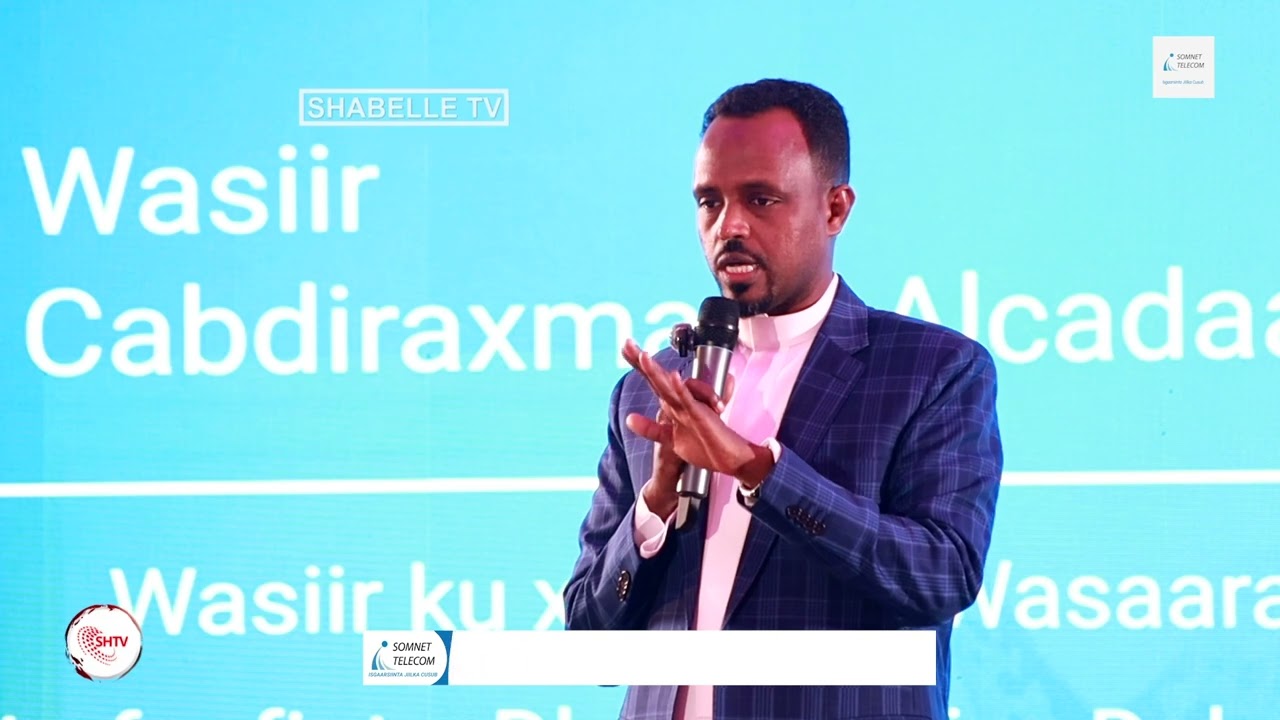
Mogadishu (Shabelle TV) - Somalia's Minister of Justice has issued a stark warning about the dangerous monetization of tribalism and hate speech on social media platforms, revealing how digital content recently contributed to deadly tribal violence in the Lower Shabelle region.
Speaking at a gathering in Mogadishu, the Minister highlighted a disturbing trend where young Somalis, including women wearing hijab, are using platforms like TikTok to spread tribalism (qabyaalad), insults (cay), and verbal abuse (aflagaado) in exchange for money. He noted that some individuals receive significant financial rewards, mentioning figures ranging from $20,000 to $30,000 and even millions of dollars, for creating divisive content that pits communities against each other.

The Minister painted a grim picture of how social media is tearing at the fabric of Somali society. He revealed that the negative use of technology has become a matter of national concern, sparking extensive debate within government offices and institutions about how to address the crisis before it further destabilizes the nation.
To illustrate the deadly real-world consequences of online hate, the Minister detailed a recent incident in Lower Shabelle (Shabeellaha Hoose) where tribal clashes erupted. According to his account, a young man from one clan, equipped with a smartphone, livestreamed from a village while his relatives were engaged in conflict with another community. The broadcast garnered sympathy and financial support, with the Minister stating the individual received approximately $80,000 from diaspora supporters who were pleased to see the rival village being attacked.
Source: Original video
This online activity, the Minister explained, directly fueled further violence. The following day, the aggrieved clan launched a retaliatory attack on the village of the streamer's clan. The conflict escalated dramatically, resulting in approximately 120 deaths according to the Minister's account, with the original streamer allegedly receiving even more money and support after the violence intensified.
"The greatest thing that encouraged and intensified that incident was footage taken by irresponsible people and shared on social media," the Minister stated, describing the situation as a national crisis requiring urgent management. He emphasized that the country faces two major challenges in combating this phenomenon: unregulated technology that poses significant legal challenges globally, and the political dimension where shutting down pages proves ineffective because when one page with 100,000 followers is closed, two new ones emerge immediately.

Rather than relying on censorship, the Minister advocated for building public awareness and creating alternative positive content. He praised initiatives that promote good role models, suggesting that if the public sees children behaving well and youth following proper examples, the problem would gradually resolve. He emphasized that the government supports such projects and views them as national initiatives worth more than monetary prizes.
The Minister also addressed the impact of social media on education and family life, noting that parents face an impossible choice between denying their children phones—which causes distress and affects school performance—and allowing access to harmful content. He revealed that 90% of imitation behavior on these platforms is negative, with children often emulating inappropriate trends.
The event was supported by Beko, described as Somalia's largest electricity provider, which supplies power to South Somalia including Banadir, Jubbaland, Hirshabelle, and Southwest states, covering all 17 districts of Banadir region and major facilities like Aden Adde International Airport, Mogadishu Port, and international embassies.
